Why a summary beats a raw diary in the room
Clinicians ask a fairly stable set of questions: when symptoms started, how often they occur, how severe they are, where they are felt, what else happens at the same time, what you have already tried, and how daily life is affected. A ten-minute slot cannot absorb ninety daily notes.
Bupa's endometriosis pain diary guidance is blunt about this: the diary is for reporting symptoms, not for diagnosing yourself. The same is true of a PDF. It is a briefing, not a verdict.
What to put on one page
Write the date range at the top. Then list average pain, the highest score, how many days you would call a flare, how many days you bled, and which medicines you actually took. Add the two or three locations that came up most often and whether pain happened mainly with bleeding or also on other days.
Skip the 90-day dump. If the clinician wants a specific week, you can open it on your phone. The one-pager is for the first five minutes of the visit, when most of the talking happens.
Leave space for impact. "Pain 6" means little without "left work after two hours" or "could not sleep before 3am." That sentence is often the part a specialist remembers.
- Date range and whether this is a first visit or a follow-up.
- Typical pain, worst pain, and where it sat.
- Bleeding days, clots if relevant, and cycle length if you know it.
- Medicines and whether you noticed a difference on those days.
- Days you cancelled plans, missed work, or needed to rest.
- Two questions you want answered before you leave.
How many weeks of tracking is enough
Endometriosis Cymru's symptom reporting work suggests collecting daily information for two to three months when the goal is a first specialist conversation. That window can show whether pain follows bleeding, arrives mid-cycle, or ignores the calendar. It is a preference, not a gate.
If you already have an appointment next week, take the days you have. A four-day record with locations and impact is more specific than "it has been bad lately." Never postpone a visit because the chart looks incomplete.
Using a PDF report without handing over your whole phone
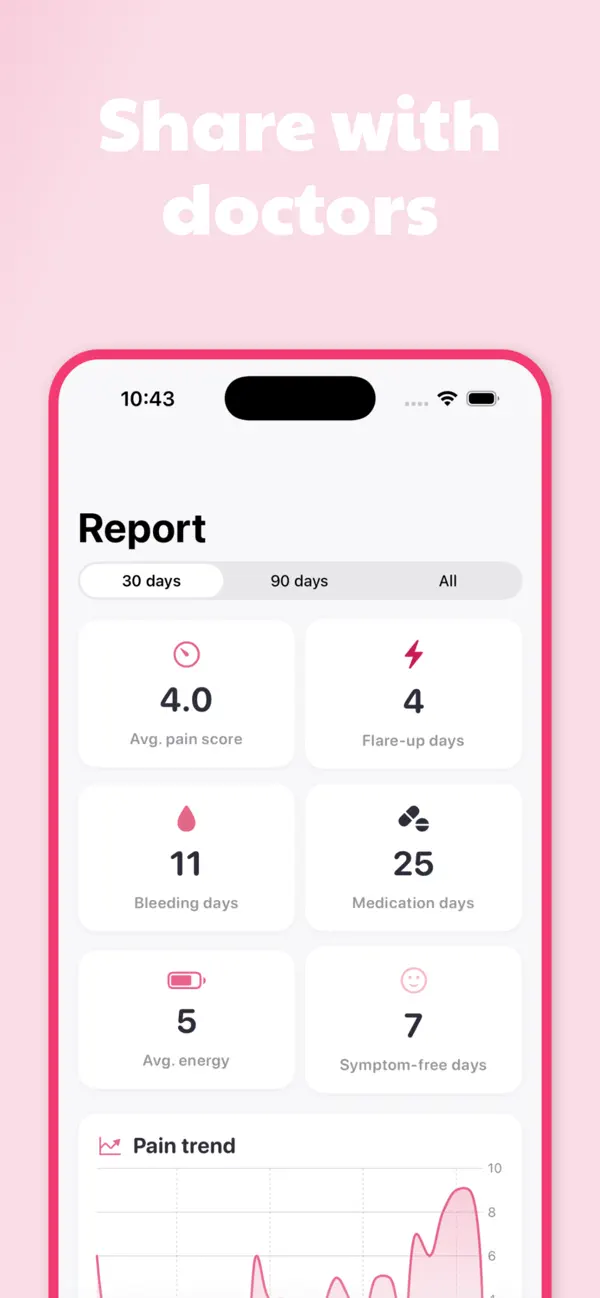
EndoTracker Pro can build a report for 30 days, 90 days, or the full history you have logged. The sample screen shows the kind of counts a clinician can scan: average pain 4.0, 4 flare-up days, 11 bleeding days, 25 medication days, average energy 5, 7 symptom-free days, plus a pain trend.
You choose whether to share it. A report is something you generate, not something that leaves the phone on its own. If you would rather not email a file, show the screen in the room or print one page.
In the room
Open with the question you care about most, then offer the summary. If the clinician wants more detail, you still have the daily registrations. If they do not look at the file, the act of writing it still helps you answer follow-up questions without guessing.
Say plainly if you want a referral, imaging, a medication review, or a plan for flare days. Tracking does not replace examination, tests, or emergency care. Sudden severe pelvic pain still belongs in urgent care, not in a tidier spreadsheet.
Sources and editorial note
This guide summarizes practical tracking information and does not provide medical advice. Health guidance was checked against the sources below on August 26, 2026.