Which endometriosis symptoms should you track?
Start with the symptoms that matter in your own life. Endometriosis can be associated with severe period pain, pelvic or lower-back pain, heavy bleeding, pain with bowel movements or urination, pain during or after sex, fatigue, bloating, nausea, and changes in emotional wellbeing. Not everyone experiences the same combination. The World Health Organization notes that symptoms vary widely and that some people have little pain while others are limited on many days of the month. Your list should match your days, not a complete medical catalogue.
A tracker should let you record a quiet day as well as a difficult one. Symptom-free or lower-symptom days create useful context when you later review how often symptoms occur and whether they follow a pattern.
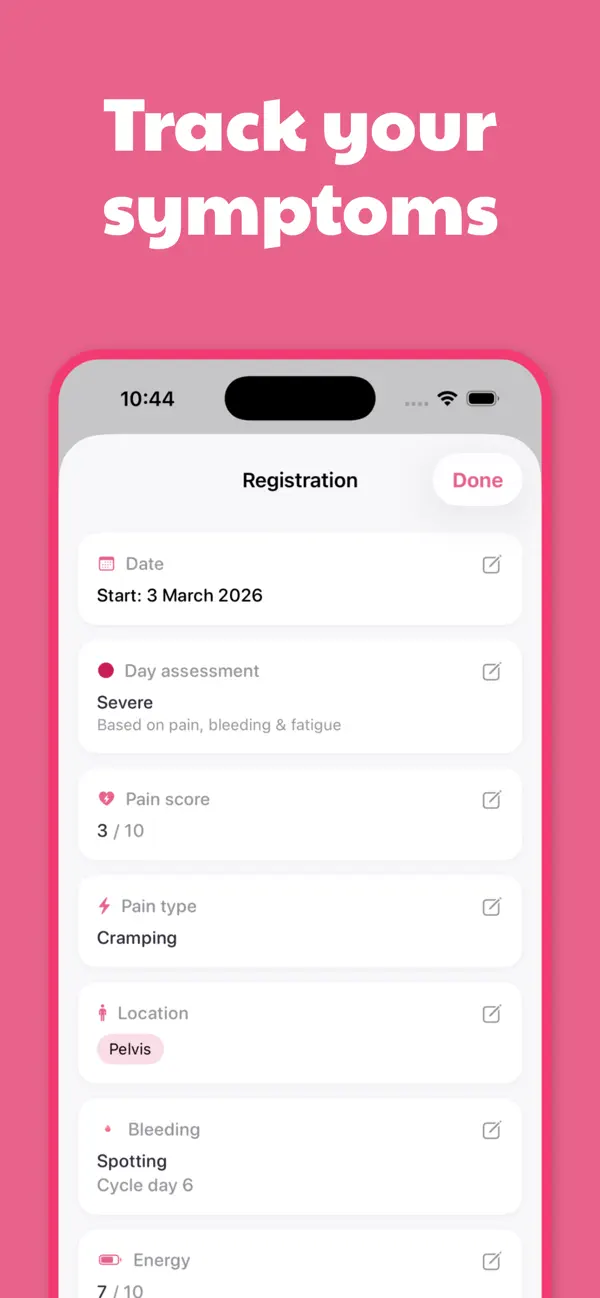
- Pain intensity, location, and sensation.
- Bleeding intensity, spotting, and clots.
- Fatigue, energy, mood, and overall wellbeing.
- Bowel or bladder symptoms and when they occur.
- Medication or supplements taken and your observed response.
- The effect on sleep, work, movement, social plans, or everyday activities.
Add context without turning every entry into an essay
A symptom score is more informative when it has context. Record the time of day, cycle day if known, what you were doing, and whether the symptom was steady or came in waves. For pain, include whether it felt cramping, stabbing, pressing, burning, dull, or sharp.
Short notes can capture details that do not fit a fixed category, such as unusual sleep, a possible trigger, recovery after surgery, or a change in routine. Treat these as observations rather than proof that one event caused another.
Build a routine you can keep using
Choose a repeatable moment, such as after dinner or before bed, and keep the core entry short. On a rapidly changing day, add another registration when the pattern changes. On other days, one entry may be enough.
A missed day does not ruin a symptom diary. Continue with the next entry and avoid filling gaps from memory unless you are confident about the details. A smaller amount of reliable information is more useful than a complete-looking record built from guesses.
Review patterns carefully
After several weeks, look for repeated timing, locations, symptom combinations, or changes around bleeding. A calendar view can make severe, moderate, mild, and symptom-free days easier to compare. A trend is a prompt for a conversation, not a diagnosis.
Medication comparisons also need care. A lower pain score on medication days does not prove that the medication caused the difference. Severity, timing, other treatments, and many other factors can affect the result. Share observations with the clinician who knows your history before changing treatment.
Turn entries into a clearer appointment summary
Before an appointment, choose a useful time period and summarize the most important patterns. Include average or typical pain, the number of difficult days, bleeding days, symptoms that affect normal activities, medications tried, and questions you want answered.
EndoTracker Pro can create a PDF with pain distribution, symptom frequency, medication information, blood loss trends, and wellness scores. A report can make a short consultation easier to structure, but your clinician still needs your full medical history and their own assessment.
Know when tracking is not enough
See a qualified healthcare professional if you think you may have endometriosis, if symptoms affect daily life, work, or relationships, or if symptoms are getting worse. Sudden or severe pelvic pain can require urgent medical care.
Do not wait to complete a diary before seeking help. An app cannot determine the cause of a symptom and should never delay an examination, diagnosis, treatment, or emergency care.
Sources and editorial note
This guide summarizes practical tracking information and does not provide medical advice. Health guidance was checked against the sources below on August 26, 2026.