
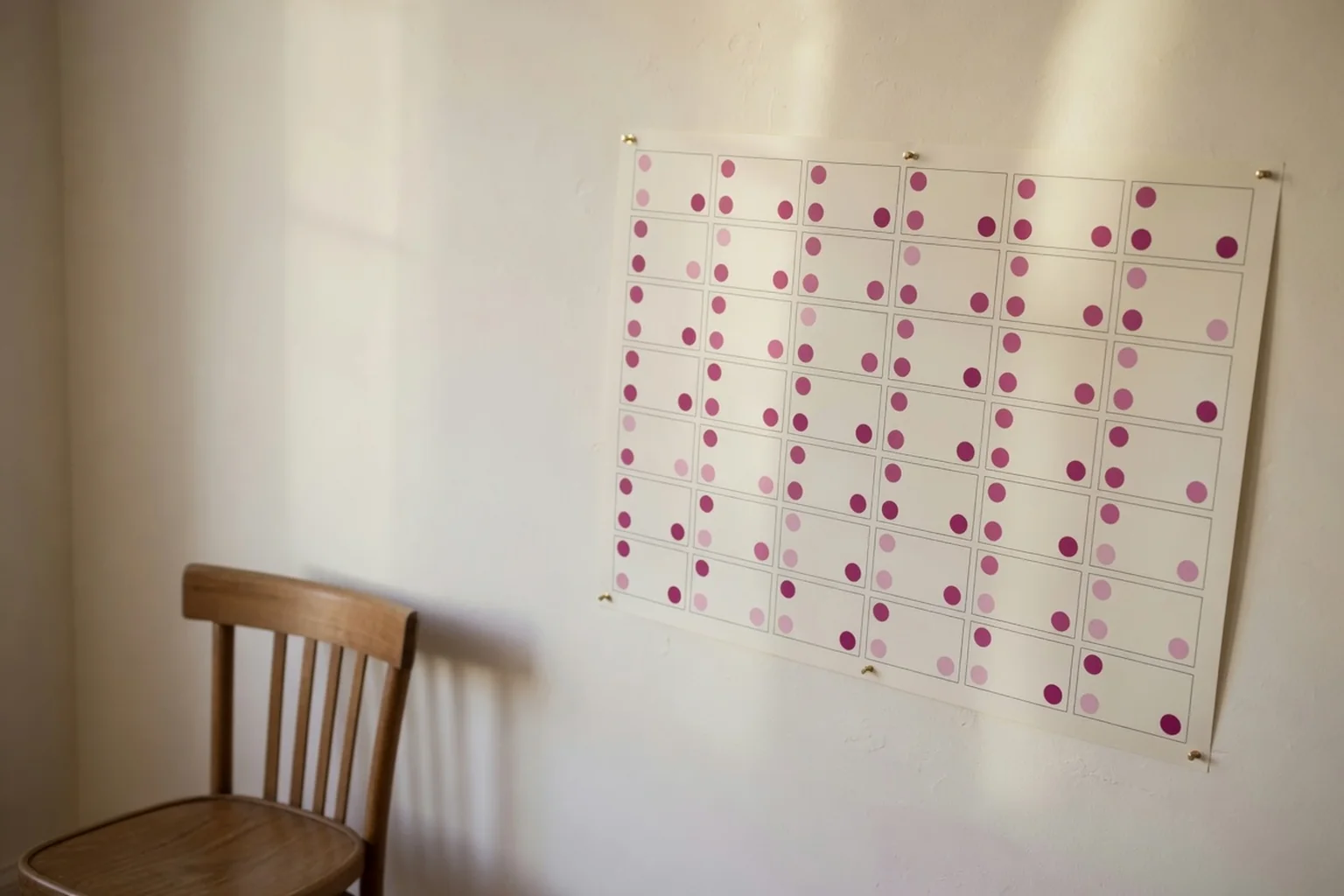
What counts as a flare-up day
Pick a definition and keep it. In EndoTracker, a day assessment is based on the combination of pain, blood loss, and fatigue, then colored mild, moderate, or severe. The sample dashboard counts flare-up days separately from calm, moderate, and pain-free days. You can use the app's label or your own rule, such as "pain 7 or above, or I had to cancel plans."
Changing the definition every week makes the count meaningless. If you change it, write the date you changed it.
Start with the month, not the line chart
A color-coded calendar is the fastest way to see clusters. Darker cells grouping before a bleed look different from a scatter of isolated bad days. The February sample in the store screenshots shows 11 severe and 12 moderate days in one month. That sentence is already more specific than "February was rough."
Tap a day only after you have seen the month. Individual notes explain a cell. They should not be the first thing you read when you are looking for a pattern.
Weekdays and bleeding days are different questions
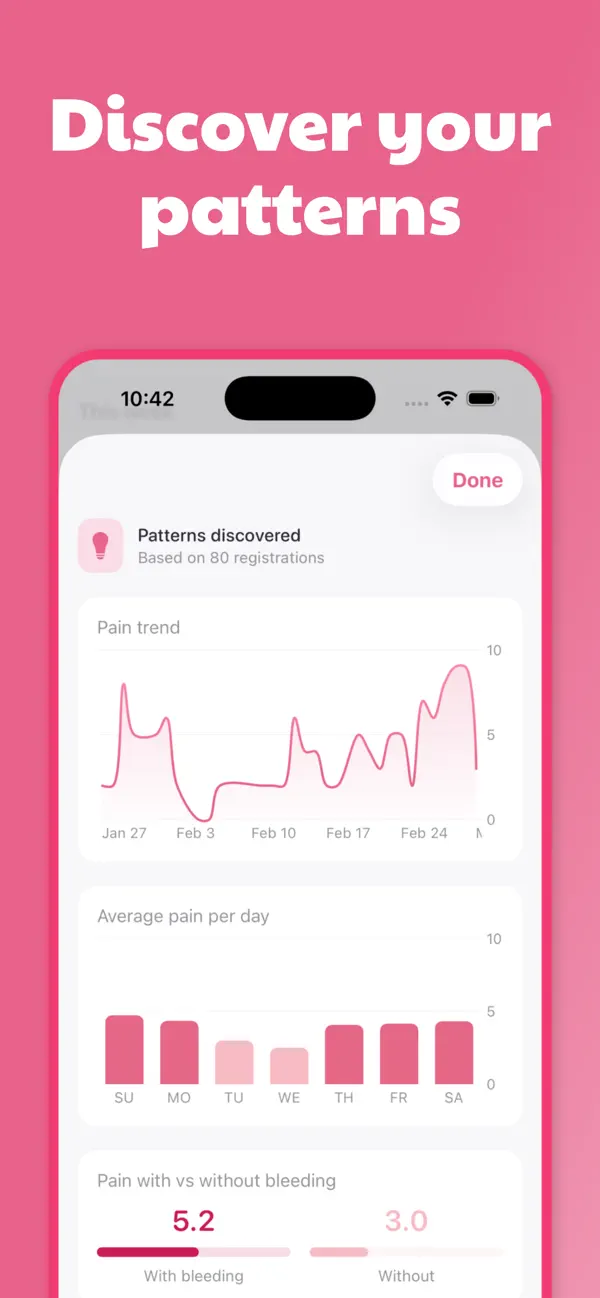
The patterns screen in EndoTracker Pro shows average pain per weekday and a split of pain with bleeding versus without. In the sample, Sunday through Saturday sit around 2 to 5, and pain with bleeding is 5.2 against 3.0 without. That is one person's 80 registrations, not a rule for anyone else.
A weekday pattern can be biology, work, sleep, or all three. A bleeding split is still not a diagnosis. It is a sentence you can take to a gynecologist: "Pain is higher on bleeding days, and Tuesdays and Wednesdays look easier in this period."
Symptoms that travel together
Pro also looks at which body areas show up most and which symptoms cluster. If pelvic pain, bowel symptoms, and low energy land on the same dates, write that down. Clue's endometriosis tracking advice makes the same point in different words: period, pain, energy, stool, and medication are more useful together than any one field.
Do not turn a cluster into a theory about food or weather unless a clinician asks you to test that idea on purpose. Notes such as "noticed after a long commute" are safer than "the commute caused it."
What to take from the chart into an appointment
Three observations beat a screenshot dump. Example: "In the last 30 days I had 4 flare-up days. Pain averaged 4. Pain on bleeding days was higher than on other days." Then ask what that means for the current plan.
If the pattern is new, say so. If nothing repeats, say that too. A diary that shows no tidy cycle is still information. Endometriosis pain can ignore the calendar, and that fact belongs in the room.
Stop looking once you have three sentences. Hunting every chart for a hidden cause is how people turn a useful diary into a second job. The calendar, the weekday split, and the bleeding split are enough for most visits.
Sources and editorial note
This guide summarizes practical tracking information and does not provide medical advice. Health guidance was checked against the sources below on August 26, 2026.