
Use a pain scale consistently
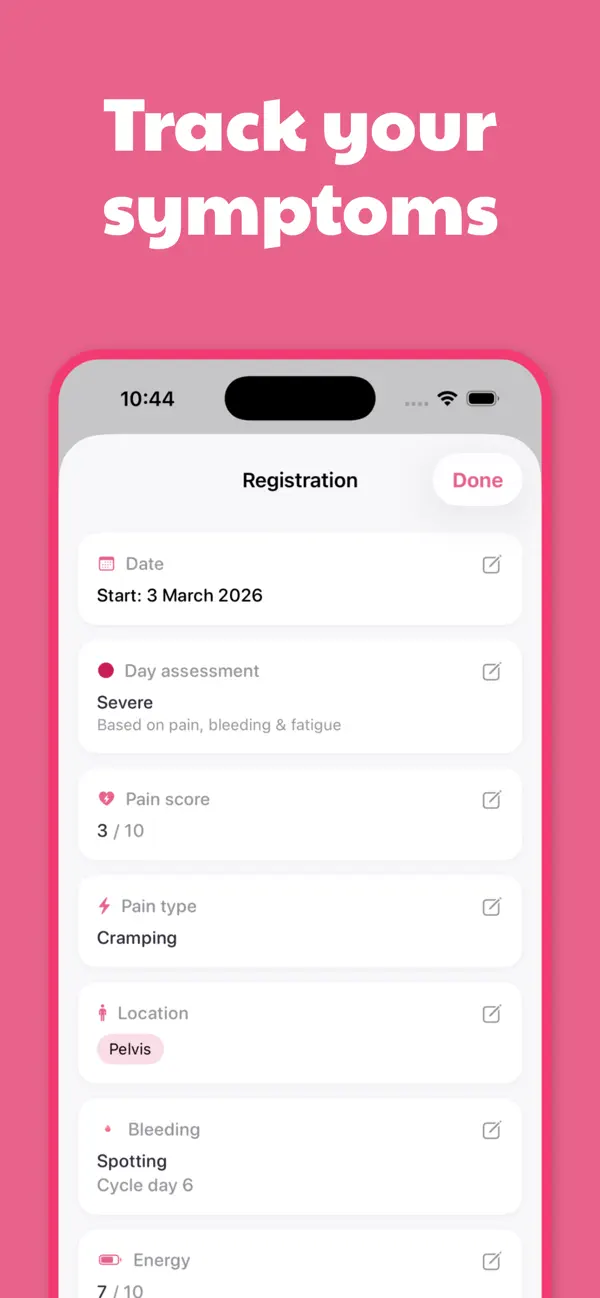
A 0 to 10 pain scale is most helpful when your own interpretation stays reasonably consistent. Zero can mean no pain, while 10 can represent the worst pain you can imagine. The middle numbers should reflect increasing interference with comfort, focus, movement, sleep, or daily activities.
There is no perfect universal meaning for each number. Your 6 may feel different from someone else's 6. Consistency within your record matters because it helps you compare your own days over time.
Record where it hurts and what it feels like
Pain location can add meaning that a number alone cannot provide. Note whether pain is in the pelvis, lower back, abdomen, legs, head, or another area. If pain moves or appears in more than one location, record each relevant area.
Describe the sensation in plain language. Cramping, stabbing, pressing, burning, aching, throbbing, sharp, and dull can communicate different experiences. Do not worry about choosing a medical term. Use the description that feels most accurate to you.
Capture timing and cycle context
Record when pain started, how long it lasted, and whether it was constant or came in waves. Add your cycle day when known and note whether bleeding, bowel or bladder symptoms, movement, eating, urination, a bowel movement, sex, or sleep happened near the pain.
The American College of Obstetricians and Gynecologists notes that a pain journal may include time of day, menstrual-cycle timing, activities around the pain, its duration, location, intensity, and what makes it better or worse. These details help a clinician understand the shape of the problem more clearly.
Include the effect on daily life
Two days with the same pain score can have a different effect. One may interrupt sleep while another may prevent work, exercise, caring responsibilities, or social plans. A short impact note helps show why a symptom matters.
A wellness check can add another layer by recording pain impact, sense of control, emotional wellbeing, social support, and self-image. These experiences are part of health and are worth discussing when they change.
Track medication without drawing your own treatment conclusion
Record the medication or supplement, the time it was taken, and your observed response. If you track pain before and after a dose, include the time between those entries. This produces a more useful record than writing only that a medicine helped or did not help.
Comparisons in a tracker show association in your own entries, not proof of effectiveness. Never start, stop, or change medication based only on an app chart. Review the record with a qualified healthcare professional who can consider dose, interactions, risks, and your medical history.
Review the pain diary before a consultation
Summarize the most frequent locations, typical and worst pain scores, flare-up days, cycle timing, symptoms that occur together, and how pain affects normal activities. Highlight changes since the last appointment instead of asking a clinician to read every raw entry.
EndoTracker Pro can place pain distribution, trends, symptom frequency, and medication entries into a selected PDF reporting period. The goal is to support a focused conversation, not replace a clinical assessment.
Seek care when pain is new, severe, or worsening
Sudden and severe pelvic pain may be an emergency. Seek prompt medical advice for new pain, pain that disrupts daily life, or pain that gets worse over time. Follow the urgent-care guidance where you live.
A pain tracker is for organizing observations. It cannot identify the cause of pain, rule out another condition, or provide emergency support.
Sources and editorial note
This guide summarizes practical tracking information and does not provide medical advice. Health guidance was checked against the sources below on August 26, 2026.