
Decide what the diary should help you do
A diary can help you remember what happened, notice repeated timing, explain daily impact, prepare questions, or compare observations before and after a treatment change. Pick one or two main goals so the diary does not become an administrative burden.
If the goal is an appointment, think about the questions a clinician is likely to ask: when symptoms began, how often they occur, their severity and location, their effect on daily life, and what treatments or medications you have tried.
Use a short daily template
Create a core check-in that can be completed quickly. Use fixed choices for recurring details and free text only when something needs explanation. This makes entries easier to compare and reduces the effort required on a flare-up day.
A practical template includes date, pain score, pain locations and types, bleeding, energy or fatigue, mood, bowel or bladder symptoms, medication, and one line about daily impact. Add cycle day when known.
- How do I feel today overall?
- What is my pain score and where is the pain?
- What kind of pain am I feeling?
- Am I bleeding or spotting?
- How are my energy, mood, bowel, and bladder symptoms?
- What medication or supplements did I take?
- What could I not do, or what was harder than usual?
Keep notes factual and specific
Write observations that will still make sense weeks later. Instead of writing bad flare, record where the pain occurred, when it started, its intensity, how long it lasted, and what activity it interrupted.
You can note food, sleep, stress, movement, sex, bowel movements, urination, or other context when relevant. Use phrases such as noticed after or happened on the same day rather than stating that one factor definitely caused another.
Use the calendar to see the story, not just individual entries
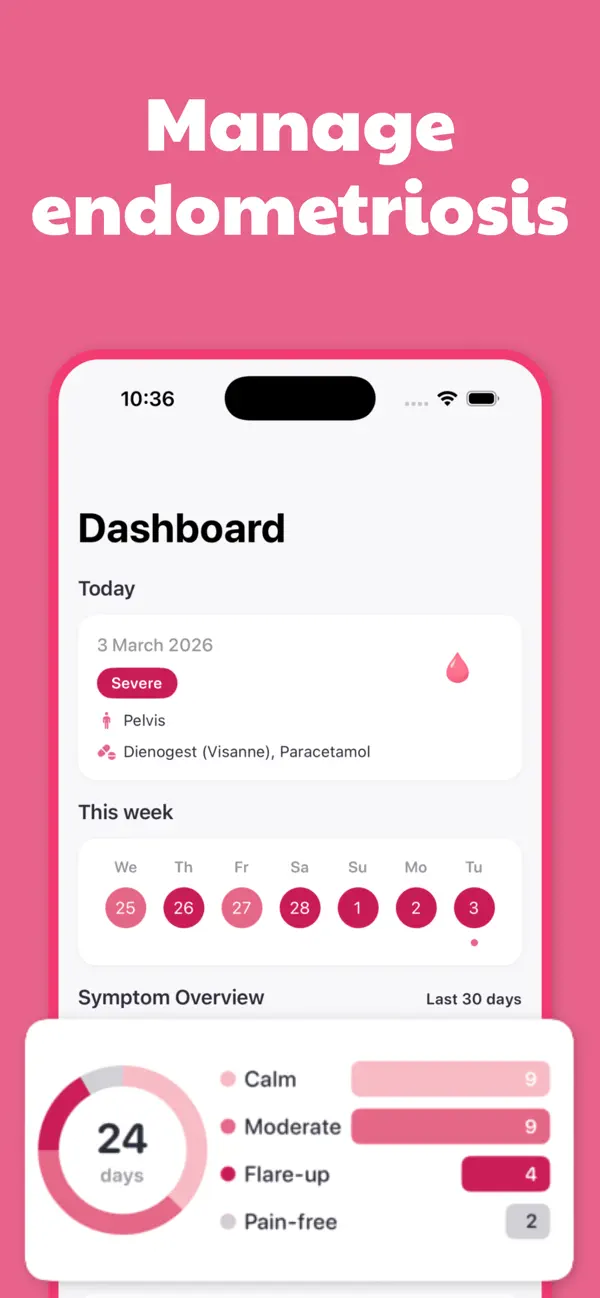
A diary becomes more useful when you periodically zoom out. Review which days were mild, moderate, severe, or symptom-free, where bleeding occurred, and whether certain symptoms tend to appear together.
Avoid searching every chart for an explanation. Human bodies and daily routines have many changing factors. Treat a visual pattern as a question worth exploring with a healthcare professional.
Create an appointment-ready summary
A short consultation rarely allows time to read a full diary. Prepare a one-page summary of the reporting period, typical and worst symptoms, difficult days, bleeding, medication use, wellness changes, daily limitations, and your top questions.
EndoTracker Pro can generate a PDF report for a chosen period. Keep the full diary on your phone and share only what you are comfortable sharing. A report does not replace your medical history or the clinician's assessment.
Choose a diary format that protects sensitive information
Paper, a notes app, a spreadsheet, and a dedicated endometriosis app each have tradeoffs. Consider how quickly you can log, whether entries are searchable, how reports are created, where the data is stored, and what happens if the device or notebook is lost.
EndoTracker is designed with no account and no cloud for health diary entries, which the App Store description says remain on the device. Apple separately discloses that purchase history, user and device identifiers, and usage data may be handled for App Store functionality. Review the privacy information before deciding what fits your needs.
Use the diary alongside professional care
A diary can help you describe symptoms, but it cannot diagnose endometriosis or determine the right treatment. Speak with a qualified healthcare professional if symptoms affect daily life, work, or relationships, or if they are getting worse.
Sudden or severe pelvic pain may need urgent care. Never delay medical help because you want to finish a diary or collect a complete cycle of entries.
Sources and editorial note
This guide summarizes practical tracking information and does not provide medical advice. Health guidance was checked against the sources below on August 26, 2026.